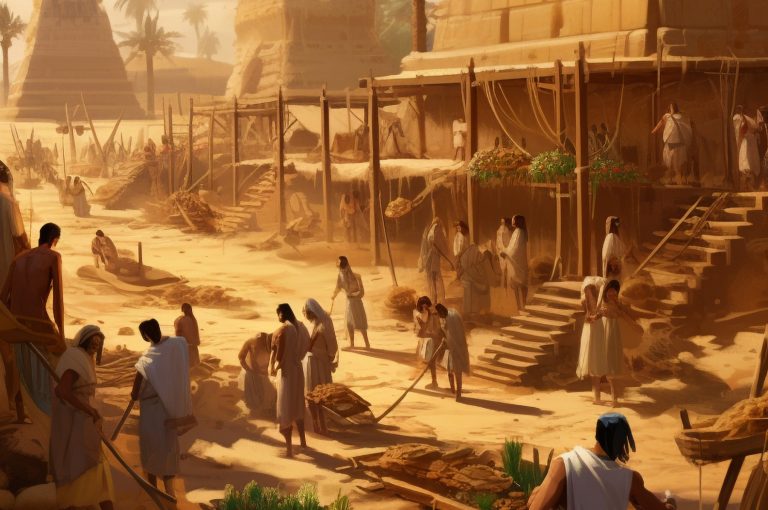
Have you read Exodus 5 recently? Whenever I read this chapter of the Bible, I’m always taken by how much it has in common with the Singaporean work ethic. If you have no idea what I’m talking about, just for context, Exodus 5 is where Moses and Aaron first go to Pharaoh and confront him with YHWH’s words, “Let my people go!”
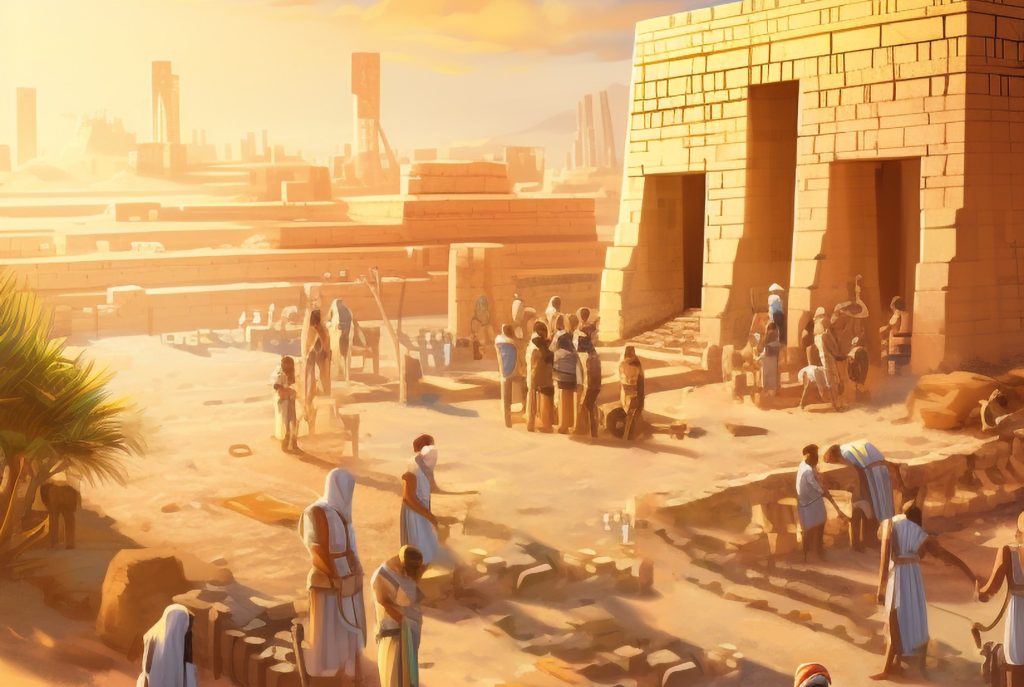
But their bold proclamation is met with the rhetoric of Pharaoh’s economy:
• “… why are you taking the people away from their labor? Get back to your work!”
• “Look, the people of the land are now numerous, and you are stopping them from working.”
• “They are lazy …”
• “Make the work harder for the people so that they keep working and pay no attention to lies.”
• “Lazy, that’s what you are—lazy!”
• “Now get to work. You will not be given any straw, yet you must produce your full quota of bricks.”
Did you catch that? In Pharaoh’s economy,
• There is always another brick to make
• Rest is considered laziness
• Productivity matters more than people
• Exhaustion keeps people from questioning the system
• The demands increase, even when the resources decrease
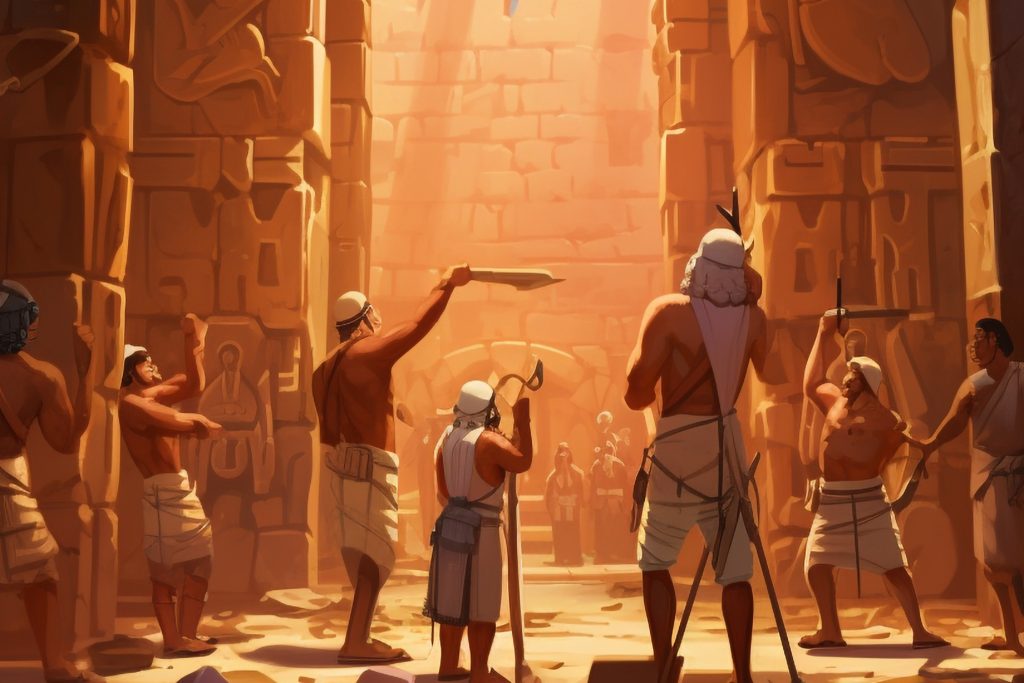
And the reason why all that sounds so eerily familiar is because Pharaoh’s economy is very much still alive today even though we are not literal slaves in Egypt. Our work culture in the marketplace – and, dare I say, even in the church – bears so much more resemblance to Pharaoh’s rapacious economy than we care to admit. Somehow, we are all prone to operate with the same values as an empire that practised human slavery.
That should trouble us.
If the values of Pharaoh’s economy are so synonymous with our own work ethic, then we ought to ask whether we too have begun to participate in a dehumanising approach to work and productivity. As God’s people, we are called to a holy way of working – one that does not treat other human beings as just another cog in the machine but instead sees our work as contributing to each other’s lives meaningfully.
Now, there is an interesting connection in this story that we often miss because it’s hard to present in our English translations.
When the taskmasters withhold the straw that the Israelite slaves require to make bricks, they say to the Israelites, “Complete your work, the same daily assignment as when you were given straw” (5:13 NRSV).
That phrase “the same daily assignment” in Hebrew is devar-yom b’yomo, which is a somewhat odd phrase that translates literally as “a day’s thing/deed in its day”.
On its own, that may not seem especially significant. But this phrase turns up only one more time in the entire book of Exodus.
Do you want to make a guess where else the Israelites are told to do something “daily’?
You get a gold star if you were thinking about the time God provides them manna in the wilderness.
In Exodus 16, God says to Moses, “I am going to rain bread from heaven for you, and each day the people shall go out and gather enough for that day (16:4 NRSV).
“enough for that day” – devar-yom b’yomo
In other words, this unique Hebrew phrase is being used to contrast Pharaoh’s economy with YHWH’s economy.
Pharaoh uses “a day’s deed in its day” to demand quota without provision. God uses “a day’s deed in its day” to teach trust through provision.
One economy is driven by scarcity: “There is never enough.”
The other is grounded in sufficiency: “God will provide enough for today.”
One says, “Make bricks without straw.”
The other says, “Gather only what you need.”
One creates restless striving.
The other forms daily dependence.
We all have a choice in the way we approach our daily work, or “the day’s deed in its day”. We can either work out of Pharaoh’s economy, in a perpetual restlessness, or we can work out of YHWH’s economy, being faithful to do the simple things He calls us to do each day.
And working out of YHWH’s economy also means taking our hands off our work once a week, with the trust that He will provide enough (16:5). Once a week, Sabbath teaches us to stop – not because the work is finished, but because God is trustworthy. That is why Sabbath is not merely an optional spiritual practice. Sabbath is integral to life in YHWH’s economy.
“Sabbath teaches us to stop – not because the work is finished, but because God is trustworthy.”

The Old Testament Scholar, Walter Brueggemann puts it well in his book, Sabbath as Resistance:
“YHWH is a Sabbath-keeping God, which fact ensures that restfulness and not restlessness is at the centre of life. YHWH is a Sabbath-giving God and a Sabbath-commanding God. Israel, for that reason, is always again to re-choose between “life and death” (Deut 30:15–20), between YHWH and “the gods of your ancestors” (Josh 24:14–15), between YHWH and Baal (1 Kgs 18:21), between the way of Torah and the way of sinners (Ps 1). Sabbath becomes a decisive, concrete, visible way of opting for and aligning with the God of rest.
That same either/or is evident, of course, in the teaching of Jesus. In his Sermon on the Mount, he declares to his disciples:
No one can serve two masters; for a slave will either hate the one and love the other, or be devoted to the one and despise the other. You cannot serve God and wealth. (Matt 6:24)
The way of mammon (capital, wealth) is the way of commodity, which is the way of endless desire, endless productivity, and endless restlessness without any Sabbath. Jesus taught his disciples that they could not have it both ways…
…The “choice of gods” is a choice of restlessness or restfulness.”
And perhaps this is where Sabbath becomes most confronting for us. Sabbath is not simply about whether we have enough time to rest. It exposes what we are really trusting in.
Are we trusting in endless busyness, or in the margin God gives?
Are we driven by hurry, or formed by slowness?
Are we surrounded by noise, or learning to receive quiet?
Are we working for love, or working from love?
Are we treating work as accumulation and accomplishment, or as contribution?
Pharaoh’s economy will always tell us there is another brick to make. Another quota to hit. Another email to send. Another person to impress. Another reason we cannot stop.
But Sabbath tells us another story.
Sabbath tells us that the world does not rest on our shoulders.
Sabbath tells us that we are creatures, not machines.
Sabbath tells us that our worth is not measured by our output.
Sabbath tells us that God gives enough for the day.
So perhaps the invitation before us is simple, but deeply difficult:
To do the day’s deed in its day.
To receive the day’s bread in its day.
And when the Sabbath comes, to stop—trusting that the God who provides is also the God who holds all things together.

“And when the Sabbath comes, to stop—trusting that the God who provides is also the God who holds all things together.”
(Images: Pixabay.com)
Read also: Looking up to God as our Father