What does it mean for Wesley to be not only a missionary church, but a missional church? Rev Raymond Fong shares a 2026 vision on 30 May to go deeper in discipleship and wider in mission participation.
For many of us, missions may conjure up images of missionaries serving in overseas fields, or enthusiastic church members going on missions trips – something that some, but not all, feel drawn to be involved in.
Rev Raymond Fong hopes to broaden that view.
Having stepped into his new role overseeing missions at Wesley in January 2026, Pastor Raymond believes missions is not meant to be the work of a few people sent by the church. It is meant to be the posture of the whole church.
He poses the question: “Are we a missionary church, or a missional church?”
“The true acid test,” said Pastor Raymond, is not whether we are sending missionaries, but whether “everyone in the church takes on a posture of loving the least, the last and the lost, and is passionate about sharing the gospel of Christ wherever God has placed them.”
This vision is shaping a new season of missions at Wesley, one that seeks to go both deep and wide.
Missionary Church or Missional Church?
A missionary church sends missionaries.
A missional church sees every believer as sent – to love the least, the last and the lost, and to share Christ wherever God has placed them.
GOING DEEP AND WIDE
Going “deep” means intentional development, equipping leaders, strengthening discipleship and working with mission partners towards long-term fruit.
Going “wide” means raising awareness and participation: helping more members understand that missions is not a side ministry, but part of the life of every disciple.
Over the years, Pastor Raymond’s understanding of missions has grown. What once seemed like an activity, project or trip has become “an ongoing mutual friendship of encouragement and co-labouring”, he shared.
At the heart of this is partnership. Wesley does not enter the mission field as a church that has everything to give and nothing to receive.
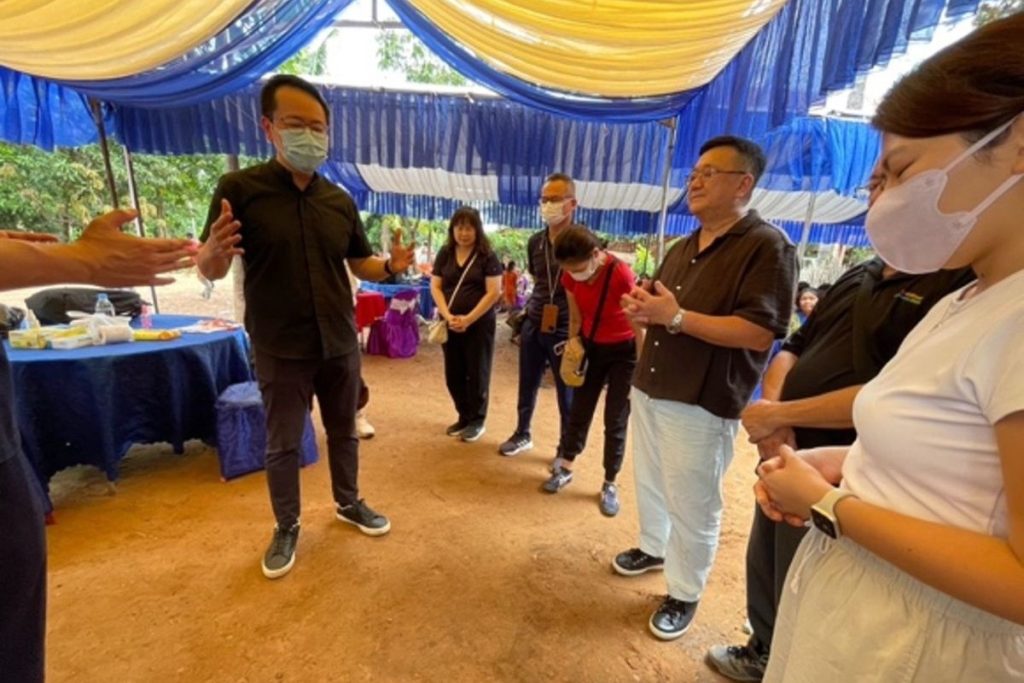
“We must be careful not to be paternalistic,” he said. “We may have resources and know-how in some areas, but our partners certainly have the passion and obedience that can sometimes put us to shame.”
He recalls the example of a pastor in Cambodia.
“We go there once every six months, but this pastor makes long trips by road to different parts of Siem Reap every month, just to make contact with the house churches and to follow up with them. That to me is sacrificial love. It’s not a comfortable kind of ministry, it’s the hard work that forms bridges and makes relationships happen.”
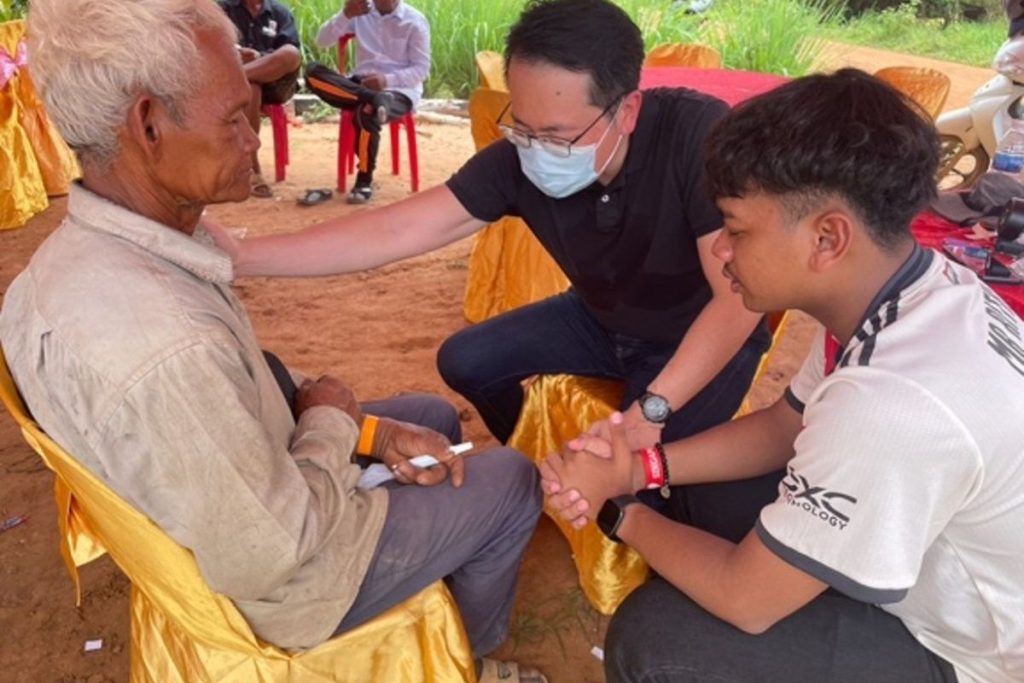
For Pastor Raymond, a healthy missions partnership involves regular conversations, having multiple touchpoints and being curious. It means asking not only, “What are some needs and opportunities that we should be aware of?” but also, “What is God already doing there, and how can we add value?”
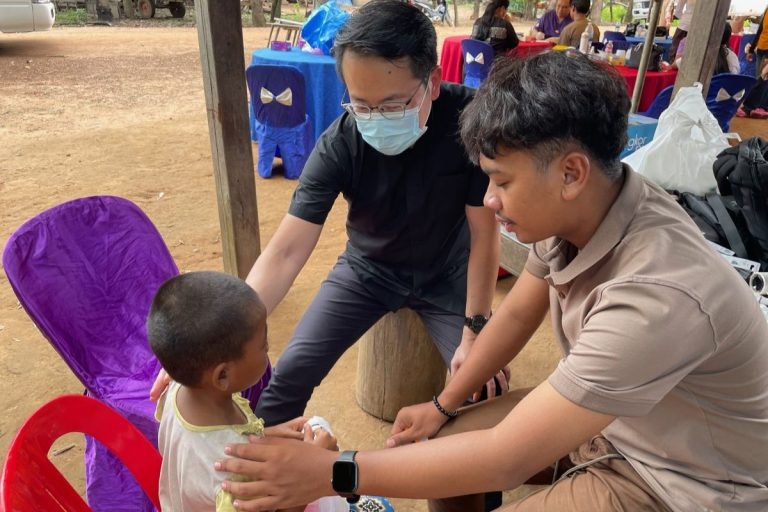
He said: “We must always keep in mind that the next generation in the local churches, whether in Thailand or elsewhere, represents the future of the church. We need to support them in breaking out of cycles of poverty, while also helping them build a strong and lasting foundation in their faith.”
Wherever possible, Wesley should also look for opportunities to raise the profile of the local church, especially where Christianity is a minority religion.
Pastor Raymond gave the example of a partner who brought a Singapore team to a refugee camp, a place that many may not choose to go.
“The presence of Christians becomes visible and meaningful, and opens doors for the team to share the gospel, and even to lead people to Christ,” he said.
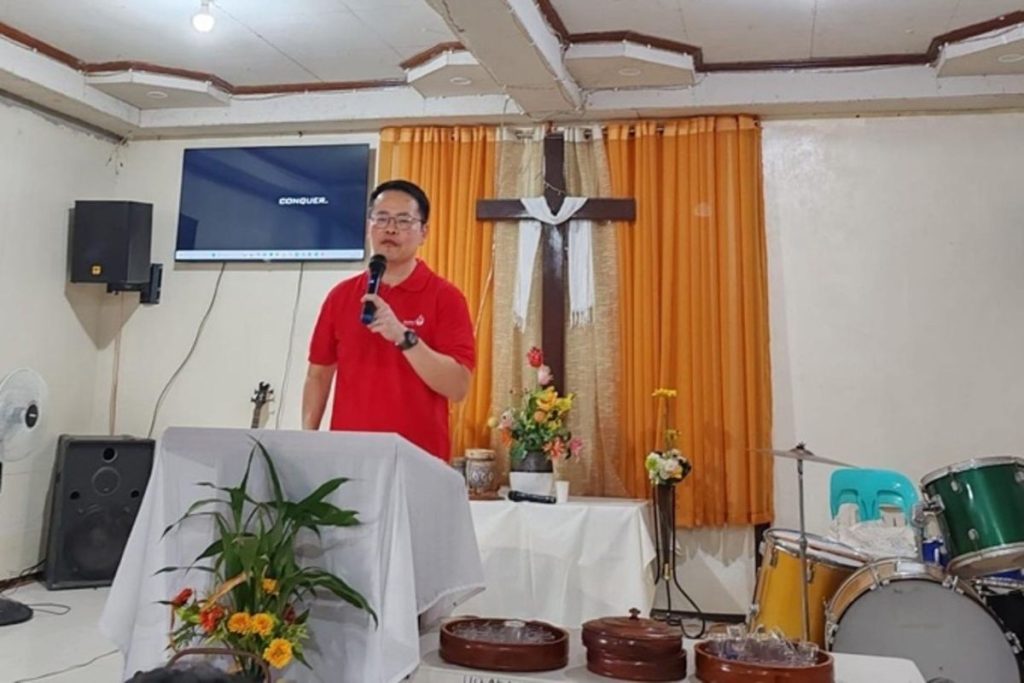
Pastor Raymond also recalls following the Facebook updates of a partner church in the Philippines and discovering how active their ministries already were, with women’s gatherings, men’s ministry, worship, youth ministry and other church activities.
“It gave me a glimpse I did not fully catch during the missions trip,” he said. “Instead of going in to run something they are already doing, we should ask, ‘How can we add to what God is already doing among you?’”
This approach also means aligning short-term missions trips with long-term plans. Trips should not stand alone as isolated events. They should be part of a larger strategy worked out together with local partners, with clear follow-up and the building of relationships over time.
3Cs OF MISSIONS
Pastor Raymond hopes to see missions efforts guided by three biblical themes from the Great Commission (Matthew 28:19–20): commitment, community and consecration.
The first is commitment. Missions must not only make converts or admirers of Jesus, but disciples who follow Him faithfully. “It is easy to create fans of Jesus,” he said. “But missions has to help make disciples, not just converts.”
The second is community. Baptism in the early church was not only a personal declaration of faith, but also a sign of belonging to the people of God and forming community. In the same way, missions should help form authentic communities of faith, especially in places where Christianity is a minority faith.
The third is consecration. Jesus commanded His disciples to teach others to obey everything He had commanded. For Pastor Raymond, the true test of missions work is not only whether someone responds to the gospel, but whether they continue in the faith.
“The challenge in missions today is not just conversion,” he said. “It is long-term obedience and discipleship.”
The 3Cs of Missions
Commitment
Making disciples, not just converts.Community
Forming authentic communities of faith.Consecration
Teaching long-term obedience to Christ.
A LEGACY OF SACRIFICIAL LOVE
Pastor Raymond’s own understanding of missions has been deeply shaped by his parents’ example.
For many years, they served among the Yi people in China, travelling to remote villages for two weeks at a time to conduct hygiene training, teach, disciple and preach. The conditions were difficult, as they would sleep in fly-infested mangers, get bitten by flies and end up with little sleep.
As a young adult, he wondered why they would keep going back. Over time, he came to understand that God had placed a deep love for the Yi people on their hearts.
“They gave 15 years of their lives and their marriage was stretched at times,” he shared. “But the fruit of their labour is that they discipled seven to 10 pastors and preachers who now lead their own churches. That is the legacy of my parents.”
That experience shaped his conviction that missions work must be intentional. There is a time to enter a field, a time to build deeply and eventually a time to entrust the work to local leaders. Since COVID-19, all missionary activities to China have ceased, and China now has to rely on its own people to lead the church.
“You never know when the window will close,” he said. “If we only keep doing trips without aim or purpose, and without building people deeply, the opportunity may one day be gone.”
DEVELOPING THE FIELD
This urgency is one reason why field development matters. Mission teams should not only bring programmes, crafts or activities. They should help equip local churches, pastors and leaders so that the work can continue even when foreign teams are no longer able to visit.
At the same time, Pastor Raymond believes that missions must start not with programmes, but with discipleship.
“The Great Commission cannot happen without the Great Commandment,” he says. “Missions starts with wonder and love for God.”
When believers love God and love people, mission becomes a natural expression of discipleship. It begins not only overseas, but at home, in school, in the workplace, in neighbourhoods and in families.
This is especially important for children and youth. Pastor Raymond believes young people need to hear stories: stories from the missions field, stories from ordinary members and stories of how God is at work in everyday life.
“Tell stories, then invite them to take small steps,” he says. “Missions starts in their homes and families. Help them see what that looks like in simple and real ways.”
Building a missional culture will require more than a quarterly newsletter or occasional missions trip testimony, he said. It will require stories to be shared across many platforms: in services, small groups, youth ministries, children’s ministries and prayer gatherings. Small groups, in particular, may be an untapped space for missional formation.
“We do not really have a missions curriculum for small groups,” observed Pastor Raymond. “But why not? If we cannot find something out there, can we create something?”
The hope is to help more members see that missions is not an optional extra, but part of whole-life discipleship.
Where Does Missions Begin?
Missions begins:
- At home
- In school
- In the workplace
- In neighbourhoods
- In families
- Wherever God has placed us
FROM COMFORTABLE TO COSTLY CHRISTIANITY
In Pastor Raymond’s own journey as a Christian, he has found that the more time he spends with Jesus, the more natural it becomes to testify about Him.
“You become moved by who He is, and you want to tell others about Christ. The Samaritan woman is a good example of this. After meeting Jesus, she went back to her community and spoke about Him, even though she had no formal training in evangelism.”
This raises an important question for the church.
“If we are spending time with the Jesus revealed in Scripture, how can we miss His heart — His compassion for people, His concern for the lost and His desire for the kingdom of God to be made known? So where is the disconnect?”
One barrier, Pastor Raymond said, is fear. Fear of rejection, fear of looking foolish and fear of losing respectability.
“We do not want to risk people saying no to us,” he said. “We do not want to risk looking foolish in the eyes of the world.”
This, he believes, points to a deeper issue: comfortable Christianity. It is possible to know much about God’s Word and yet not allow it to transform us into people who live courageously for Christ.
“It is easy to hang out with Jesus when it is comfortable discipleship,” he says. “But the call of Christ is not comfortable Christianity. It is costly Christianity.”
The invitation is clear: for Wesleyans to go deep in discipleship, wide in participation and move forward together as a church that lives missionally wherever God has placed us.
(Photos courtesy of Wesley Missions)
Read also: Seeing God’s Healing in Remote Cambodian Villages