Dear Wesley Family,
I hope you had a most blessed start to the new year. I pray for the peace of God to guard our hearts in Christ as we journey with God and with each other in the season ahead.
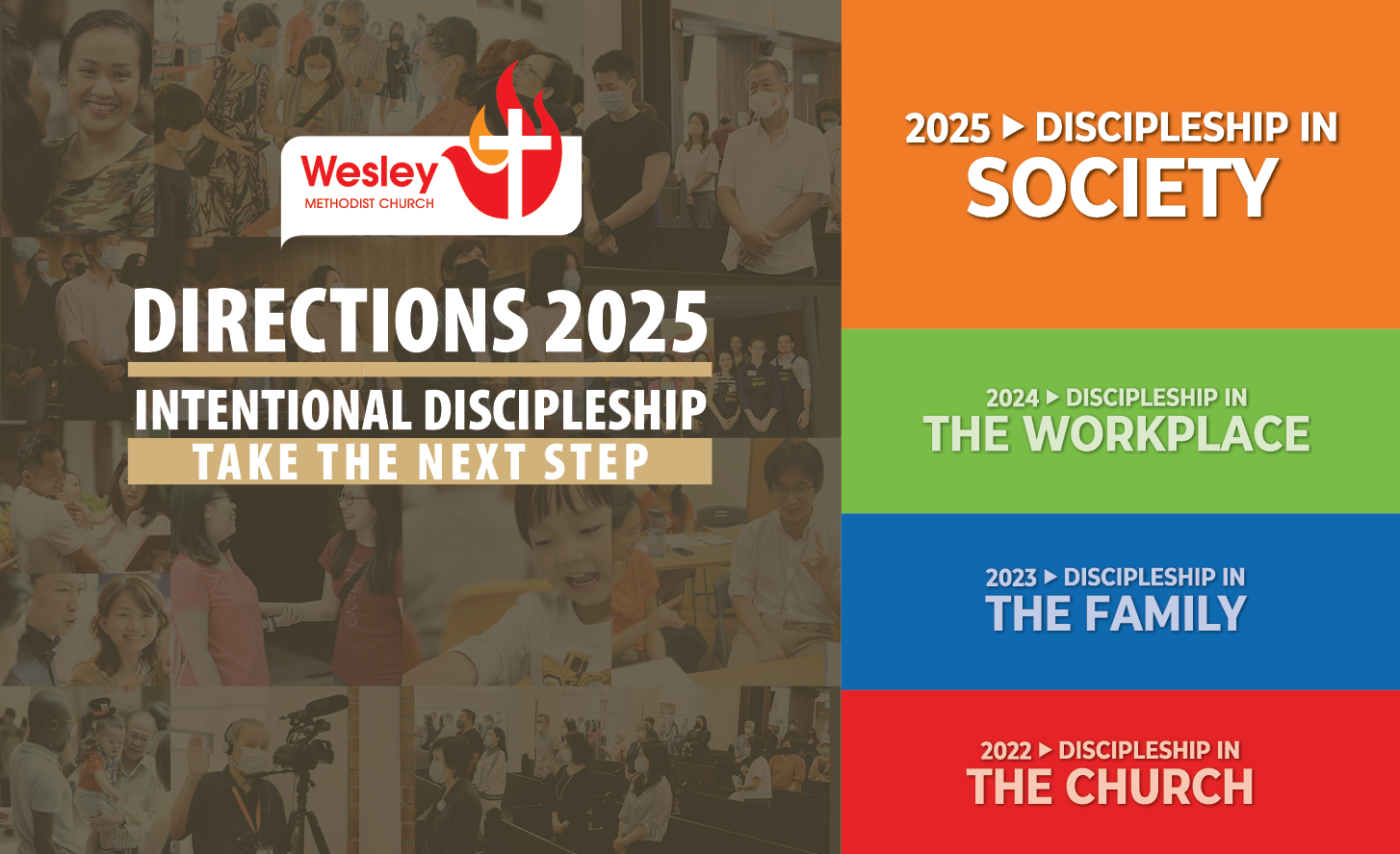
2026 is designated as a Year of Sabbath Rest. We have just completed a four‑year journey in Directions on Intentional Discipleship: Church (2022), Family (2023), Workplace (2024) and Society (2025).
Last year was particularly busy for us as we had many outreach initiatives which included about 40 mission trips, monthly Block Parties at Jalan Besar and large events like Journey to the Cross and Singapore Night Festival, the Outreach Conference and hosting TRAC’s Annual Conference.
This is why this year is designated as a year of rest.
The purpose of 2026 is to recalibrate so as to find a rhythm of ministry which is sustainable, flourishing and fruitful for the journey ahead. It is to intentionally move towards Vision 2035 as we seek to be a welcoming, missional and caring church in the city that God has called us to be in.
Let me encourage you with a few perspectives about Sabbath rest.
The starting point for understanding the Sabbath comes from Genesis 1:31–2:3.
Genesis 1
31 God saw all that he had made, and it was very good. And there was evening and there was morning—the sixth day.
1 Thus the heavens and the earth were completed in all their vast array.
2 By the seventh day God had finished the work he had been doing, so on the seventh day he rested from all his work.
3 Then God blessed the seventh day and made it holy, because on it he rested from all the work of creating that he had done.
This is the first mention of the Sabbath in God’s Word. Genesis 2 tells us that God rested on the seventh day from all the work of creating that He had done.
The purpose of 2026 is to recalibrate so as to find a rhythm of ministry which is sustainable, flourishing and fruitful for the journey ahead.
The word “Sabbath” in Hebrew means to cease, stop, pause, celebrate or rest.
Observing the Sabbath then became the fourth commandment (Exodus 20:8–11) of the Ten Commandments given to the Israelites.
The Israelites learnt how to observe the Sabbath in Exodus 16, when God provided manna for His people for six days. On the sixth day, God provided a double portion which, unlike previous portions, remained fresh overnight. On the seventh day, God rested from providing the manna and the people rested from collecting it.
At the core of the Sabbath is the moment when we stop striving and enter into surrender. Surrendering to God who provides.
There are three thoughts about Sabbath rest I wish to share with you.
SABBATH REST IS NOT JUST REST FROM WORK BUT WORK FROM REST
Truth is, we will not be able to have the type of Sabbath rest where we stop working and do nothing. I also do not think that is what Sabbath rest means. Rather, it is the posture that matters.
At the core of Sabbath rest is being deeply rested in who God is, His faithfulness and providence, His love and forgiveness. This is so we can work from a place of being rested. Deeply rested.
What is interesting is that in Genesis 1:31, which is the sixth day of creation, God saw all He had made and it was very good. Not just good but very good.
The prelude to the seventh day is a day when the goodness of God’s creation is celebrated so that true rest can be entered into on the seventh day.
You can only be deeply rested on the seventh day when you recognise the goodness of God on the sixth day. It is only when we look back at how good and faithful God has been in the past that we can be truly and deeply rested as we look to God for the future.
Sabbath rest means we will continue to work and serve the Lord but constantly return to a fresh place of surrender for God to bear fruit through all we do.

This is the posture we hope to cultivate as individuals, as families and as a church as we work from a place of being deeply rested in God.
SABBATH REST IS IN A PERSON AND NOT AN ACTIVITY OR THE LACK OF IT
Jesus declared in Matthew 12:8 that He is the Lord of the Sabbath. That means He fulfils the meaning of the Sabbath.
Christ as Lord over the Sabbath is the key to understanding the Sabbath for us today. The rest promised in the Sabbath of the Old Testament is the rest fulfilled in Jesus and in Him only. This is because the deep spiritual rest from salvation and the redemptive forgiveness of sins is fulfilled in Jesus.
We can only find such true spiritual rest in the completed work of Christ who is the pioneer and perfecter of our faith.
Through His death on the cross and His resurrection, Christ has conquered sin and death. Christ is returning soon for us.
This is why Hebrews 4:9–11 reminds us that there remains a Sabbath rest for the people of God. The writer of Hebrews exhorts us to be diligent to enter that future Sabbath rest for God’s people, a rest which God has promised to us all.
Our earthly Sabbath is a shadow and foretaste of the eternal eschatological rest that we will enjoy in Christ when He returns.
Today, I pray for you to find your true rest in Jesus. It is not what you do or do not do that will give you rest. Jesus says in Matthew 11:28, “Come to me, all you who are weary and burdened, and I will give you rest.”
True rest is in a person. We need to go to the person of Jesus for true Sabbath rest. This means finding our rest in our relationship with Christ as we take time to dwell with Him and find our delight in His Word and promises as we find our joy in obedience and surrender.
May you come to Jesus and find true rest in Him. He alone can truly satisfy your longing and weary heart.
True rest is in a person. We need to go to the person of Jesus for true Sabbath rest.
SABBATH REST IS A JOURNEY OF MATURING DISCIPLESHIP
Sabbath rest is not simply what we do on occasion but the journey we take as disciples of Christ.
The more we learn to pursue true Sabbath rest in trust and surrender, the more we grow in maturity of faith.
Sabbath rest offers a framework for discipleship. Through Sabbath rest, we grow in the likeness of Christ who Himself was rested in His surrender to His mission to go to the cross.
We too are called to take up our crosses daily as part of our discipleship (Luke 9:23). In doing so, we receive true rest and the resurrection power to journey with God for the seasons ahead.
Sabbath rest allows us to flourish and be fruitful as we find ourselves sustained by God’s grace for the journey ahead.
CONCLUSION
As I close, I wish to emphasise that Sabbath rest is not a means to an end. We are not “taking a break” this year so we can do more in 2027. Sabbath rest is an end in itself. It is part of a sacred rhythm of intentional and maturing discipleship.
Will you make Sabbath rest your personal hope and vision this year? Will you ask God for His grace for you to have a rhythm of Sabbath rest as you pause, rest, reflect and be renewed in a fresh trust and surrender in Christ?
May God be glorified as we enter His rest.
Seeking Sabbath rest with you,
Pastor Ray
(Images: Pixabay.com)
Read also: Leadership and Servanthood in Ministry: Looking Up to God for Vision and Guidance