When Yvonne Choo moved from Singapore to Tokyo in late 2025 after more than 25 years in student ministry, she discovered that the same God who had walked with her on the National University of Singapore (NUS) campus is already at work among students in Japan and opening surprising doors.
Yvonne first began serving students through Varsity Christian Fellowship at NUS in 1997, where she ministered for more than two decades. Supported by Wesley Methodist Church, she combined hands-on ministry with seasons of theological study. Looking back, she sees those years as preparation for this new calling.
“I felt called to move into this area, particularly focusing on international students within East Asia, and not just simply Singapore,” she said.
Japan has about 300,000 international students, the second largest number in Asia. Yet Yvonne notes that the church is often not strong enough to support international student ministry on its own.
Today, Yvonne serves with an international student ministry in Tokyo. An ongoing challenge she faces is language. She attends Japanese classes twice a week and worships in a Japanese-speaking church to immerse herself. “I can’t live here without speaking Japanese,” she said.
At church, “the sermon and everything is in Japanese. I can understand some of it… like a good 20 percent. With Google Translate on, I can follow 50 to 60 percent of the sermon.”
Her first-year goal is simple but important: “to get my Japanese to conversational level”.
“Japan has about 300,000 international students, the second largest number in Asia. Yet the church is often not strong enough to support international student ministry on its own.”
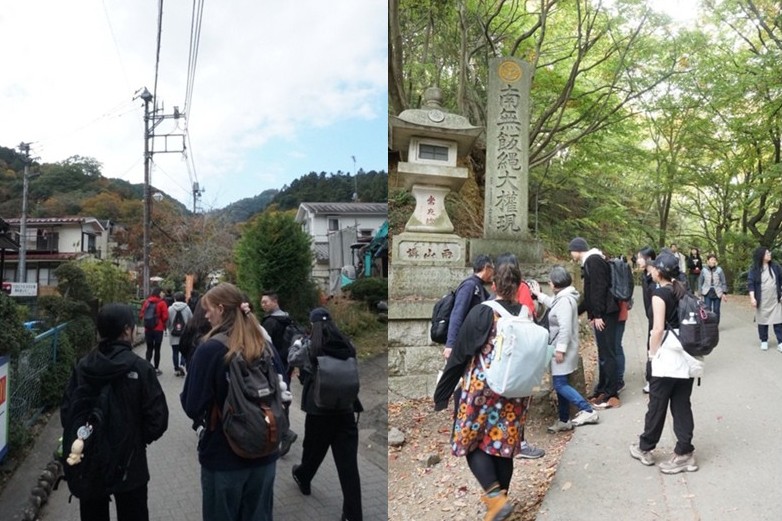
A CHANGING CAMPUS LANDSCAPE
Japan’s universities are quietly changing. Some now offer full degree programmes entirely in English, creating new opportunities for ministry among both international and Japanese students.
Yvonne is assigned to one such university, where the entire programme is conducted in English.
The student body itself reflects globalisation: one third are international students, another third are long-term foreign residents and the final third are Japanese students with international backgrounds or English-speaking families.
In a typical week, Yvonne’s time is divided between Japanese lessons, being on campus and various gatherings. She also continues to serve through a global international student ministry network, helping students stay connected when they move countries or return home.
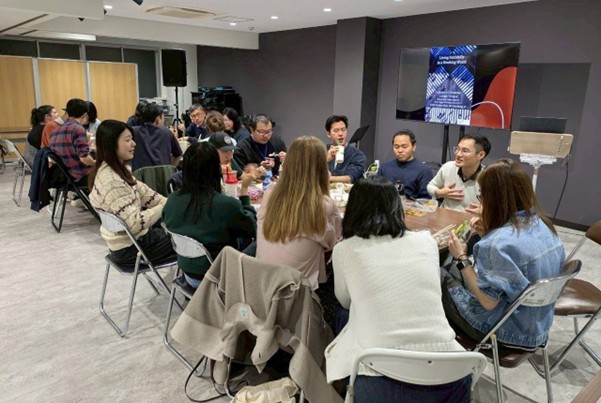
SUPPORTING RETURNEES
One area where Japan leads the world is its returnee network for Japanese students who come to faith overseas. There are over 10 different agencies in the United States that connect students to returnee camps before they return to Japan, helping them prepare for life back home.
Students are then connected to regional coordinators in Japan. If a graduate returns to a less resourced area like Saitama, the coordinator can say, “There are a couple of churches I can recommend to you. We also meet on Zoom to pray together.”
Yvonne sees her own role as one link in this larger chain, where long-term, cross-border cooperation is critical to helping new believers persevere. “We just have to make sure that there’s someone who will receive the returning student at any point in time,” she said.
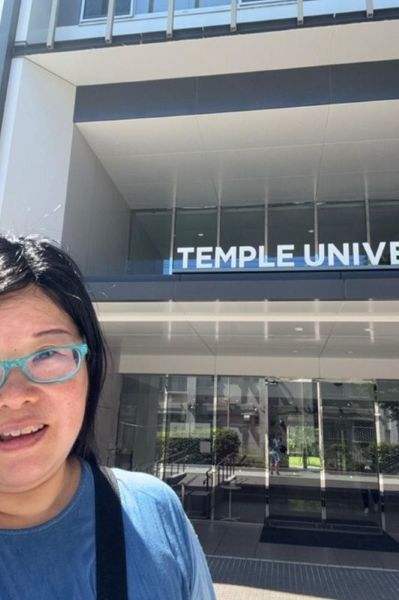
OPEN DOORS ON CAMPUS
Yvonne has seen God open remarkable doors on campus. One striking example came from a “pure Japanese” university, Meiji. A law professor invited her to be a guest lecturer in a 90-minute class.
Because it was near Christmas, Yvonne chose to teach through the passion narrative: “I talked about how Christmas is because of this guy called Jesus, and the reason for celebrating his birth is because of his death.” She asked the students to read the Gospel account of Jesus’ trial and “evaluate according to Japanese constitutional law how legal it was, how many constitutional articles it contravened.”
She expected translation, but after the first sentence the professor asked the class if they were comfortable with English. They replied yes, and she delivered the whole session in English. The Q&A that followed was intense and honest. Students did not ask about constitutional law, but about life and faith:
“Do you not think that God just wants to control everything?”
“Don’t you think that Christians are irresponsible, because you claim that God is responsible for everything?”
Her planned 30-minute Q&A stretched to an hour, then spilled into the corridor as students stayed behind to talk. Two weeks later, the professor told her that one student wanted to visit a church, and asked, “What do you think about starting an English Bible study now in our university?”
Yvonne reflected, “I wasn’t intentional. I don’t think there’s anything that I said. God has opened doors in ways that would never happen in Singapore.”
“Two weeks later, the professor told her that one student wanted to visit a church, and asked, “What do you think about starting an English Bible study now in our university?””
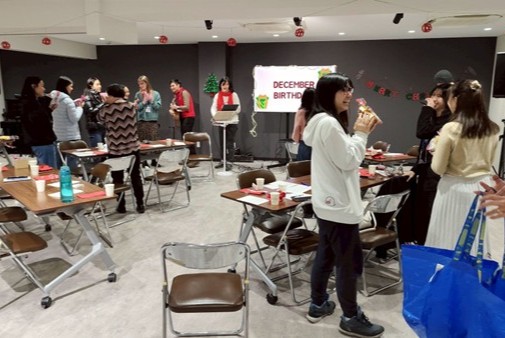
HOSPITALITY AS A WAY OF WAY
For Yvonne, hospitality is one of the most practical entry points for ministry: “We hold Christmas parties, and they came to my place for a hot pot for Chinese New Year.”
These are intentionally low-pressure environments where students can build friendships and ask questions without having to listen to a talk.
One non-Christian student especially struck her. “He keeps coming to gatherings. He’s even more faithful than the other Christian students,” she said. He turned up early for a session on the theology of work—a topic “not something that even the Christians want to hear”—and offered to help with ushering. He later admitted to understanding maybe 10 percent of the talk, but then began going around the room asking other students, “So why did you become a Christian?”
For Yvonne, such scenes capture how God uses simple acts of welcome to spark spiritual curiosity.
“Hospitality is not simply a means to an end. It is an end in itself. God has called us to hospitality regardless. There is a theology of hospitality within the Bible that talks about God as host. God is a God of hospitality, and he wants you to be like him,” said Yvonne.
“God uses simple acts of welcome to spark spiritual curiosity.”
WHEN GOD WORKS IN THE MESSENGER
Cross-cultural ministry not only changes the people who are served; it changes those who serve. Yvonne recounts meeting a Singaporean student on exchange in Japan—someone very much like the students she once worked with back home.
“In Singapore, she only goes to church because of her parents, which is like many of our youths,” Yvonne explains. The student joined their fellowship not out of spiritual interest but to make friends.
Over a few months, Yvonne watched God awaken her faith: “From being nominally Christian to a point where she wants to reach out to the Japanese.” The student began to wrestle seriously with what she believed and even wondered if she might one day return as a missionary.
Reflecting on this, Yvonne remarks that ministry to international students is not just evangelism; it is discipleship for second- and third-generation Christians: “We offer everyone not just fellowship and encouragement, but also the chance to take a look at their own faith and see what really matters.”
““From being nominally Christian to a point where she wants to reach out to the Japanese.” The student began to wrestle seriously with what she believed and even wondered if she might one day return as a missionary.”
PARTNERING WITH THE JAPANESE
While Yvonne’s primary assignment is to international students, she increasingly senses that this work is also with the Japanese church. Many congregations are small, ageing and unsure how to engage foreigners.
At a recent Japan-wide conference she helped organise—the first of its kind for those working with international students—participants included missionaries, international churches and Japanese congregations with a handful of overseas students.
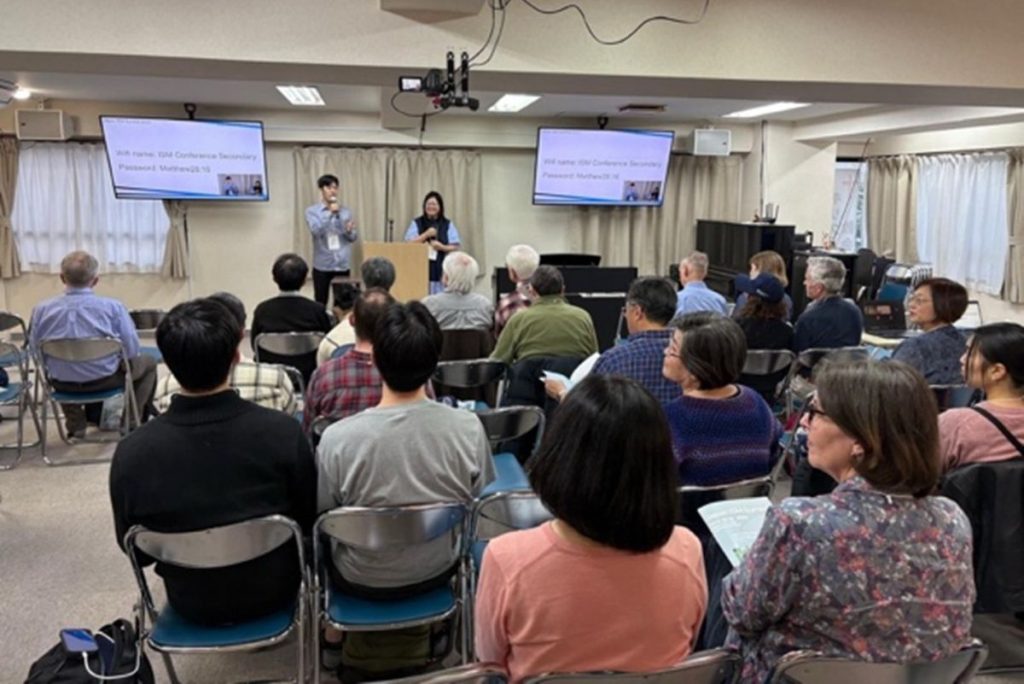
A Christian media company covered the event and highlighted a key theme: “International students, and foreigners in general in Japan, may be a way to revitalise the Japanese church,” especially churches “that have only old people in the congregation.”
Yvonne sees more ministry opportunities than she can personally handle: “Churches and ministries are asking for help. There are more ministry opportunities than I can handle at this point in time.”
She prays for wisdom to discern where to invest and for more workers who can serve alongside local churches in culturally sensitive ways.
“International students, and foreigners in general in Japan, may be a way to revitalise the Japanese church.”
HOW CAN WE PRAY
Perseverance in language and cultural learning
Ask God to help Yvonne grow in Japanese so she can build deeper friendships and partner meaningfully with local churches.
Students on Japanese campuses
Pray for both international and Japanese students, that their curiosity about the gospel will lead them to Christ and that they will find fellowship and spiritual support during their time at university.
The Japanese church
Pray for ageing congregations to warmly welcome foreigners and for international believers to bring life, encouragement and renewed vision to worship and mission.
Global networks and returnees
Give thanks for the Japanese returnee network and wider international student connections. Pray that students who return home will continue to grow in faith and become rooted in strong Christian communities.
(Photos courtesy of Yvonne Choo)
Read also: Following God Beyond Our Comfort Zones