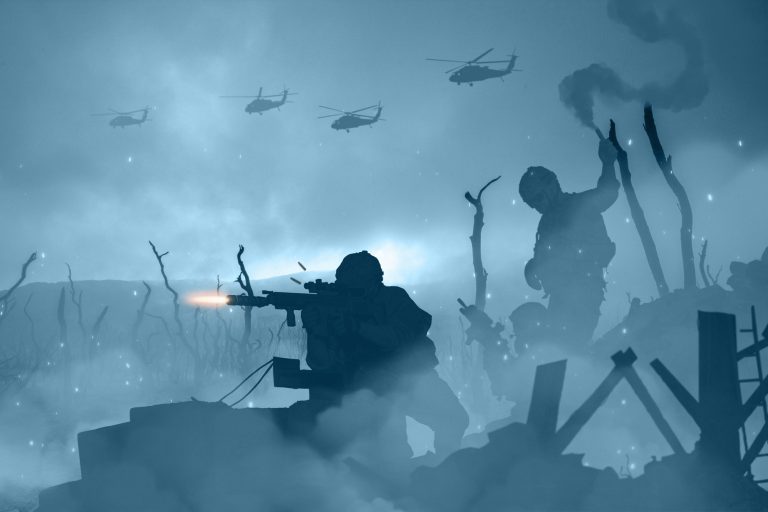
With headlines turning towards the escalating conflict in the Middle East, a collective sense of unrest may settle over us. Whether we know someone in the region or are simply heavy-hearted from images of suffering, displacement and mobilisation, war can stir deep anxiety, sadness and helplessness. It is a complex reality. Yet for the Christian, the tension may feel even more acute when faith and geopolitics collide. How do we respond when the world draws lines in the sand? How do we fix our eyes on Jesus, the Prince of Peace, in a world of conflict?
In this Q&A interview, Rev Raymond Fong, Pastor-in-Charge at Wesley Methodist Church, offers a pastoral perspective on navigating these uncertain times while remaining firmly grounded in Scripture.
Q: How did you feel when you learnt that war had broken out in the Middle East?
To be honest, I was very angry. I was furious about the choices made by individuals who appeared to be pushing a particular agenda. I am deeply saddened that this war will bring about innocent casualties and increased suffering for many who will be displaced and severely affected. My heart goes out to the least and the last who will bear the brunt of the downstream consequences of this war.
But God led me to release forgiveness. He led me to surrender the outcome of this war to Him. He assured me that His sovereign purposes will prevail.
Q: When we see the scale of suffering caused by war, where is God in the midst of it? Where is our hope in these uncertain times?
It helps to remember that God is not the author of war. It grieves His heart when He sees human conflict. Because suffering grieves Him and His nature is pure compassion, God enters into our suffering and carries our burdens with us. The cross reminds us that we have a God who suffered for us and now suffers with us.
Psalm 46 reminds us that when “the nations rage [and] the kingdoms totter” (ESV), God is our refuge and our help in times of need. This means God is present with us, even in ways we cannot comprehend. He comforts, strengthens and provides. In His sovereign time and way, suffering is redeemed for His purposes. We can rest our hope in that.
“In His sovereign time and way, suffering is redeemed for His purposes. We can rest our hope in that.”
Q: What should be the very first reflex of a believer? When the news cycle is relentless, many of us feel helplessness and compassion fatigue. How do we address this emotional exhaustion to keep from becoming indifferent?
Our first response is to lament. Biblical lament is bringing our righteous anger, helplessness and sense of injustice to God and finding our rest as we surrender to Him.
The way to stay compassionate is to never stop asking the Spirit to grant you compassion. Allow the Spirit to plough the hardened ground of your heart so it becomes soft and tender, making space for His compassion to renew you.
Q: What specific Scripture texts can we meditate on to keep our hope in the midst of war? What can the congregation hold on to when the news feels overwhelming?
First, we can turn to Scripture that speaks of God’s presence and protection: Psalm 46:1–3, Psalm 91:1–2, Deuteronomy 31:6 and Isaiah 43:1–7.
God’s Word also assures us of His divine peace in the midst of conflict. Verses such as John 16:33, John 14:27 and Philippians 4:6–7 offer much comfort and assurance.
Finally, we turn to Scripture that points us to our hope in God’s promise of eventual peace when Christ returns. Revelation 21:1–4 and Isaiah 2:4 come to mind.
Till Christ returns, we can rest in His promise that nothing can separate us from His love (Romans 8:38–39) and that we can endure with His strength as we wait upon Him (Isaiah 40:31).
Q: Is prayer really a practical response or just a last resort? How should we pray when an invasion is imminent or already underway?
I would suggest that we do not think of prayer as “practical”. Prayer keeps our hearts tender and humble. It does not need to accomplish an objective, such as asking God to stop the war, but allows God to transform us through the process. Prayer enables us to surrender to His goodness.
“Prayer enables us to surrender to His goodness.”
Even when a war has begun and seems unending, we can pray for restraint on the part of the perpetrators.
We must keep praying for the least and the last, and for those most affected by war: the sick, the handicapped, the elderly and children. We pray that they may be shielded, protected and provided for.
We pray that what the Enemy intends for destruction, God will turn to good in His sovereign ways.
We pray for divine comfort for the grieving and those who have lost loved ones.
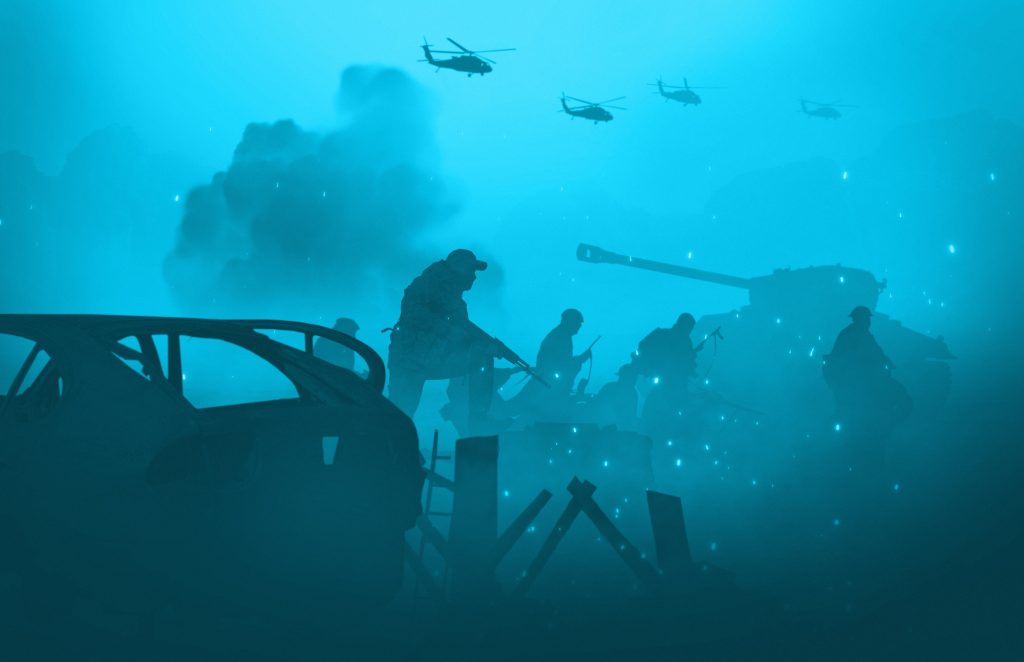
Q: What is one “litmus test” for our social media posts or conversations during this time? How do we remain sensitive to friends of other faiths when discussing these conflicts?
Here is one consideration: ask yourself whether someone from the country being attacked would see the love of Christ or the pride of a partisan if they read your post. If it is the latter, it may be better not to post it. The digital world thrives on polarisation. Before posting or replying, ask if your words reveal the grace of love (Ephesians 4:29) or simply stir offence.
The Word of God calls us to empathy (Romans 12:15). Let us focus on shared heartbreak rather than argument during such sensitive times. As we process the headlines, let us remember that our calling is not to be partisan but to be peacemakers.
“Our calling is not to be partisan but to be peacemakers.”
Q: What are practical ways to help when the conflict is thousands of miles away? What can I do from here in Singapore?
Every conflict, however distant, reminds us of the need for peace. Because we belong to God’s kingdom of peace, we are called to be peacemakers (Matthew 5:9), not merely peace-lovers. Peacemaking is active work, and every act of peace and kindness we perform locally builds the Kingdom of God.
This means we can make peace in our families, workplaces, schools and spheres of influence. The peace we long for in the world is the peace we must practise at home and in our neighbourhoods.
By cultivating a culture of peace in a diverse, multi-religious society like ours, we can offer a glimpse of what the Kingdom of God looks like.
We can also give to support humanitarian organisations and relief agencies such as the Red Cross.
We must also embrace God’s design of Imago Dei–the truth that every person is made in the image of God. This means treating every individual, regardless of faith or nationality, with dignity and respect.
The loss of lives is often regarded as collateral damage to fulfil the objectives of war. This does not reflect the heart of Christ, who left the ninety-nine to look for the one lost sheep. Every life is valuable in God’s eyes. May God give us the grace to honour and regard everyone as a person of dignity and worth. May we not treat anyone as “collateral damage” for the sake of our agendas and desires.
“May God give us the grace to honour and regard everyone as a person of dignity and worth.”
Q: One final word for the person who feels helpless and overwhelmed by all this bad news?
I must admit that I wrestle with helplessness whenever I read disturbing and frustrating news. But I remember that I am not helpless when I pray and love the person right in front of me.
May I be a peacemaker, starting with peace at the dinner table and in my community. May I persevere in prayer with a posture that says, “Lord, I do not know what to do but my eyes are on You” (see 2 Chronicles 20:12). May we remember that even when times are dark, God’s light still shines, and His comfort and strength continue to sustain those who are hurting and struggling.
May we put our faith in a sovereign Lord whose return will one day restore and renew all things. Till then, let us stay faithful. Let us take care of one another. Let us pursue His shalom.
“May we put our faith in a sovereign Lord whose return will one day restore and renew all things.”
Let us say this prayer together
Heavenly Father, we lift up everyone involved in the conflicts of the Middle East. You are the Lord of Peace, and we lay the world’s brokenness at Your feet. Comfort those who are injured, who have lost loved ones, who are anxious and who are suffering physically and emotionally. Give rest and strength to the weary heart. We pray for leaders who will humble themselves in the fear of Your name. Grant them godly wisdom and compassionate hearts. In these uncertain days, anchor our souls in Your certain hope. May Your Kingdom of shalom come on earth as it is in heaven. Amen.
(Images: Freepik.com)
War is a complex and hard subject. Read more about the Christian perspectives by Dr Roland Chia on war here: